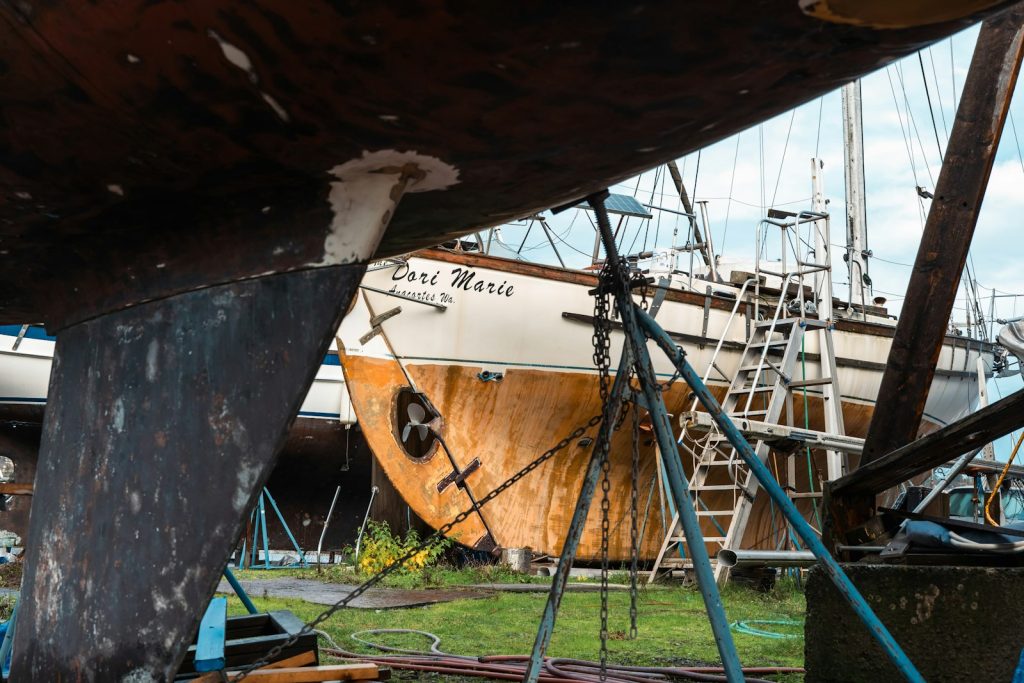
Owning a phinisi means holding legal title to — or effective commercial control over — a traditional South Sulawesi wooden sailing vessel, whether newly commissioned at the yards in Tana Beru, Ara, or Bira, or purchased from the active second-hand market circulating through Labuan Bajo and Bali. It is one of the few ways to own a named piece of UNESCO-recognised intangible cultural heritage while also running a viable charter business — or simply sailing privately through the waters of Komodo and Raja Ampat. The two goals are not identical, and which one drives your decision changes almost every number in this guide.
This page is a seven-stage orientation. Each stage has its own deep-dive pillar; links are listed at the bottom. Read this first, then go deep on the stages that apply to your situation.
Stage 1 — Define Your Mission Before You Do Anything Else
The single most consequential decision in phinisi ownership is not which yard to use or how much to spend. It is what the boat is for. Three broad missions exist, and each one reshapes every downstream decision: legal structure, required certifications, build or purchase specifications, management model, and realistic exit options.
- Private use only
- Personal cruising, no paying guests. Lowest regulatory complexity. A foreign individual can potentially own through a simple Indonesian PT company without needing a commercial sea-transport licence (SIUPAL). Costs do not offset because there is no revenue. Resale market is thin.
- Charter business
- Paying guests aboard, commercial operation. Triggers the full cabotage and certification stack: Indonesian flag, SIUPAL or equivalent licence, BKI class or passenger safety certificate, crew manning minimums, annual port-authority inspections. A foreigner cannot simply own a charter boat outright — see Stage 4.
- Hybrid (private use + commercial charter when owner is away)
- The most common foreign-owner model and the most legally complicated. The charter component requires the full commercial stack regardless of how many private weeks are reserved. “I only charter it eight months a year” is not a lighter compliance burden.
Get specific: how many weeks per year do you actually intend to use it yourself? What region — Komodo, Raja Ampat, East Indonesia? Do you want a dive liveaboard, a bare sailing boat, or a luxury floating villa? Vague answers at this stage produce overbuilt boats, the wrong licences, and management contracts that do not match actual use patterns.
Stage 2 — Buy Used vs Build New: An Honest Decision Matrix
The classic pitch from yards is that building new means you control every scantling. The classic pitch from brokers is that buying used saves time and avoids overrun risk. Both are partly right and partly self-serving.
Buy used — the real trade-offs
Speed is the genuine advantage. A vessel in the water with existing paperwork, crew, and a booking pipeline can generate revenue in months rather than years. But what you are buying with a used phinisi is almost always unknown structural condition. Wooden hulls in tropical salt water suffer teredo worm damage at the keel and garboards, fastener corrosion (“nail sickness” from mixed or low-grade metals), and accumulated rot behind recent paint. The only way to price this honestly is a professional marine survey before any money changes hands — and survey standards for wooden Indonesian commercial vessels are not standardised. There is no BKI-equivalent survey history that travels with most used boats.
Asking prices in the current market range from roughly USD 80,000–200,000 for a maintained 20–25 m boat that is 15–25 years old, up to USD 300,000–800,000 for an operational 30–35 m boutique liveaboard, and USD 700,000–1.5 M for a refitted 35–40 m vessel with coherent paperwork [ESTIMATE — observed asking prices, not verified sales]. Discounts of 20–40% off asking after a survey finding structural work are common. Budget the refit before you agree a price, not after.
A further complication: Indonesian vessel title is held through the grosse akta kapal at the Dirjen Hubla registry. Informal sales — family transactions never formally re-registered, undischarged liens, changes of ownership recorded only in WhatsApp messages — are common in the Labuan Bajo market. Engage an Indonesian maritime lawyer to conduct a title search before signing anything.
Build new — the real trade-offs
A new commission at a Bulukumba yard gives you full specification control: timber selection (ulin ironwood for keel and frames where available; teak for decks and interiors; bitti for curved planking), cabin layout, engine choice, electrical and plumbing systems. The panrita lopi — master builder and ritual specialist — works from memory and oral tradition, not blueprints. Communication and supervision cannot be outsourced to trust.
Build timelines for a basic hull and superstructure: roughly 8–12 months for a ~20 m vessel, 12–18 months for a ~30 m, 18–24+ months for 40 m and above [ESTIMATE — industry-reported; actual depends on yard queue and timber sourcing]. Dunia Baru, a 51 m vessel, took eight years from contract to completion — the owner, Mark Robba, is on record about this. The hull was quoted at USD 130,000; fasteners and bolts alone added another USD 100,000 not included in the quote. The total project ran to an estimated six times the original USD 1 M projection [Boat International, owner-stated]. That is an extreme case, but overruns of 20–50% on initial quotes are commonly reported across the industry [ESTIMATE; no audited data].
After hull launch at the beach, the vessel is typically towed to Bali (Serangan or Benoa), Surabaya, or Jakarta for engines, electrical systems, navigation equipment, and interior fit-out. Plan for this as a separate phase with its own timeline and budget.
| Factor | Buy Used | Build New |
|---|---|---|
| Time to revenue | 3–12 months | 2–5+ years (hull + fit-out + certification) |
| Specification control | None | Full (with on-site supervision) |
| Hidden structural risk | High without survey | Low if BKI-supervised build |
| Cost certainty | Medium (survey-adjusted) | Low (overruns endemic) |
| Certification starting point | Inherits existing — check gaps | Built to spec from keel |
| Overrun risk | Refit scope creep | 20–50% cost overrun typical |
Stage 3 — Set the Budget Envelope (And Then Add 35%)
Turn-key costs — hull, fit-out, engines, systems, certification, and the first year of operations before revenue covers expenses — land in very wide brackets. Budget open-trip vessels at the 20–30 m scale can be delivered for USD 120,000–400,000 at Indonesian-local standard. Charter-grade 30–35 m boats suitable for selling to the international market run USD 400,000–900,000. Western-specification 35–40 m builds reach USD 1–2 M. Forty-metre-plus superyacht-style commissions historically cost USD 3–7 M, and the landmark 55–65 m flagships are thought to have cost USD 6–15 M+ in total [ALL FIGURES: estimates — no publicly audited build accounts for any of these vessels exist].
The most important number in that set is the overrun buffer. Yard quotes in Bulukumba are typically lump-sum on the hull, oral on extras. Imported engines, gensets, navigation electronics, and fit-out materials are priced in USD or EUR; Indonesian rupiah depreciation increases their cost mid-project. An independent contingency of 20–50% on the full project budget is the commonly-reported range needed to complete without a funding crisis [ESTIMATE]. Underfunded builds stall on the beach for years.
Then there is OPEX. The charter revenue does not start the day the boat launches. You must pre-fund at least 6–12 months of operating costs before your first booking. One builder-published model (Riara Marine — a yard with a sales interest, so use with care) describes total operating costs of IDR 50–100 M per month for a mid-tier phinisi. Crew wages alone on a budget 8–12-person boat run IDR 30–70 M/month [ESTIMATE]. Annual haul-out, antifouling, and routine caulking work for a 25–35 m wooden hull: IDR 100–400 M [ESTIMATE]. Hull and machinery insurance for a wooden Indonesian-flag commercial vessel runs roughly 1.5–4% of agreed hull value per year [ESTIMATE — international insurers vary widely; some decline wooden hulls entirely]. The working rule of thumb for wooden charter vessels is 7–12% of replacement value per year in maintenance — higher than the 5–10% norm for GRP yachts.
If those numbers leave you uncertain whether the cash flow holds, they should. Model it in detail before committing to purchase or build.
Ready to run the numbers with someone who has seen what these projects actually cost? Use our enquiry form to describe your project and we will help you stress-test the budget before you make commitments.
Stage 4 — Choose the Legal Structure Under Cabotage Before Spending Money
For foreigners considering phinisi ownership, this stage is the most important and the most underserved by published guidance. Get it wrong and you cannot legally operate commercially in Indonesian waters at all.
Indonesia’s cabotage principle — Law 17/2008 on Shipping, strengthened by Law 66/2024 — requires domestic passenger and cargo carriage to use Indonesian-flagged vessels owned by Indonesian shipping companies. Indonesian flag requires majority Indonesian ownership. A wholly foreign-owned entity cannot own a commercial passenger vessel in Indonesia. Full stop.
The most common structure used by foreign investors is a PT PMA (foreign-owned Indonesian limited company) in the sea-tourism transport KBLI category (50113 — Angkutan Laut Wisata). Foreign equity in this category is capped at 49%. Indonesian nationals must hold the majority. The minimum investment threshold widely cited in practice is IDR 10 B per KBLI registration [ESTIMATE — policy practice, not statute]. Note: Law 66/2024, which came into force in late 2024, imposes new requirements on PMAs established after October 2025, making the classic single-phinisi PT PMA route meaningfully harder for new entrants.
Nominee arrangements — where an Indonesian national nominally holds the majority on a side letter with a foreign backer — are explicitly illegal under Investment Law 25/2007 (Article 33). Such agreements are void; the risk is licence revocation, not just a paperwork fine.
A structure sometimes used in practice: an Indonesian PT owns the hull; the foreign party provides financing through a loan or joint-venture profit-share arrangement, functioning as a creditor rather than a registered owner. This has its own enforceability risks and must be reviewed by Indonesian maritime counsel specific to your situation.
Private foreign-flag yachts can cruise Indonesian waters for personal use under current e-clearance arrangements. Commercial charter under a foreign flag is illegal; enforcement has been reported (without naming specific cases) in Komodo and Raja Ampat waters.
Information, not legal advice. Engage Indonesian maritime counsel before structuring any transaction.
Stage 5 — Execute the Build or Purchase With Independent Supervision
The single most consistent finding from every credible source on phinisi builds — naval architect Michael Kasten’s long-published critique at kastenmarine.com is the most cited — is that the absence of independent supervision produces unsafe vessels. The yards in Tana Beru and Ara build by oral tradition and rule of thumb. That tradition produces extraordinary hulls. It also produces variable fastenings, unseasoned timber, and structural choices that a Western surveyor would flag. Neither outcome is guaranteed without someone on site who can read the difference.
For a new build: engage a naval architect or independent marine surveyor to define the specification in writing before signing any contract, be physically present at critical stages (keel-laying, frame erection, planking, launching), and involve BKI (Biro Klasifikasi Indonesia) from the start if class certification is the goal. Milestone-based payment contracts tied to verified completion of each phase are the standard risk mitigation. Without them, money flows ahead of work.
For a used purchase: commission a professional marine survey before agreeing price. Survey scope for a wooden vessel must include probing the keel, garboards, and bilge areas for teredo worm damage and rot; pulling sample fasteners to check for corrosion; reviewing engine hours and maintenance records (reconditioned truck engines with no hour meters are common); and confirming certification currency — passenger safety certificates, radio licence, load line, and the BKI class certificate if the boat claims it. Also verify the grosse akta title chain is clean. Expect the survey to take two to three days on a 30 m vessel.
Stage 6 — Set Up Operations: Crew, Certification, Management
A phinisi in commercial service is a regulated passenger vessel. The certification stack for Indonesian commercial operations includes: grosse akta (title), surat ukur (tonnage certificate), SIUPAL or SIOPSUS (company-level sea-transport licence), BKI class certificate (if applicable), passenger ship safety certificate (annual), load line, radio, pollution-prevention, and safe-manning certificate. Crew must hold Indonesian seafarer licences — ANT I–V for deck officers, ATT I–V for engineers, and BST basic safety training for all crew members. Foreign cruise directors or dive staff occupy a regulatory grey area and are not counted as the vessel’s licensed crew.
Crew size: budget open-trip boats typically run 8–12 crew; mid-tier dive liveaboards 12–18; ultra-luxury vessels up to 26 crew for approximately 16 guests [ESTIMATE, with the 26-crew figure for top-tier vessels supported by industry analysis]. Monthly crew wages at the budget end: captain IDR 7–15 M, engineer IDR 6–12 M, deckhand IDR 3–5 M [ESTIMATE — triangulated from regional minimum wages and industry practice; no official published scale].
Three management models are in common use:
- Owner-operator via own PT — maximum control, full regulatory and HR exposure, requires resident management presence.
- Full management company — Bali and Labuan Bajo-based firms handle crewing, maintenance, compliance, and often sales. Fees: operations-only 15–25% of gross; operations plus sales 25–35% [ESTIMATE — market practice, varies by contract].
- Revenue-share JV — operator takes a management fee plus cost reimbursement; profit split commonly around 50/50; owner net often 40–60% of net revenue after costs [ESTIMATE]. OTA and agent commissions — booking portals typically charge 10–20%, dive wholesalers 10–25% — layer on top of management fees, so combined distribution can consume 30–45% of gross before the owner sees anything.
Seasonality is structural. Komodo high season runs April–November (July–August peak); many boats reposition to Raja Ampat from October to April as seas allow. Realistic billable utilisation for a well-marketed boat is 120–180 days per year (33–50%) [ESTIMATE]. The only published charter P&L model — from Riara Marine, a yard with inventory to sell — implies a 30–40% gross yield on a mid-tier boat at 120 charter days per year. Treat it as one data point from an interested party, not a benchmark.
Stage 7 — Think About Exit From Day One
Phinisi resale liquidity is thin. There is no organised exchange; price discovery happens via brokers (Yacht Sourcing and Indo Yachts are the main Indonesia-based channels), international brokers for larger vessels, and informal WhatsApp groups in Labuan Bajo. Asking prices sit unsold for months to years — the IDR 9.2 B ask on a well-specified 38 m vessel in the current market was reduced from IDR 10 B and remained available; a USD 950,000 ask on a 2017-build Kartini-style vessel on YachtWorld saw a price reduction before any sale [observed listing data, not confirmed sale records].
Wooden charter vessel depreciation is not linear. Maintenance-intensive but well-documented boats hold value better than neglected ones. A vessel sold as a going concern — with active bookings, a management contract, and current certifications — commands a meaningful premium over a bare hull. Build your records from day one: maintenance invoices with dates and yard names, BKI survey history, engine service records, financial accounts. They are the difference between a credible sale and a prolonged negotiation.
For foreign-owned structures: deregistration and re-flagging involves separate Indonesian clearance steps (Cruisers Forum threads document the process for import into Australia, including 5% import duty and 10% GST on arrival). Plan this in advance if your exit scenario involves moving the vessel out of Indonesia.
Who Should Not Buy a Phinisi
This section exists because the market does not include it.
Return-chasers. If you are buying a phinisi primarily because someone projected an 18-month payback period or a 30% annual yield, the projection almost certainly came from a party with something to sell you. No public, audited occupancy and revenue data exists for the Komodo and Raja Ampat charter fleet. Published models come from builders or operators with an interest in your investment. The charter market is real, the demand is real, and some owners do well. Some do not recover their capital. We cannot tell you which outcome you will have, and neither can anyone else.
Absentee owners without committed local management. A phinisi requires year-round crew management, maintenance scheduling, certification renewals, and physical presence at the yard during haul-out. Remote ownership without a trusted on-the-ground operator — one with genuine operational authority and accountability, not just a percentage commission — produces deferred maintenance and regulatory gaps that compound quickly in a tropical marine environment.
Sub-funded buyers. If the purchase price exhausts your capital, the project will stall. The commonly-reported 20–50% overrun range on builds, plus 6–12 months of pre-revenue OPEX, plus a structural refit budget if purchasing used — these are not optional reserves. They are the cost of keeping the project alive through the inevitable delays and surprises.
If none of those three describe you, the rest of this site goes deeper on every stage. You are welcome to reach out via our enquiry form or WhatsApp — not to be sold anything, but to get oriented before the conversations with yards and brokers begin.
Pillar Pages: The Full Reading Order
- Phinisi for Sale: How the Brokerage Market Actually Works — listing channels, what asking prices hide, negotiation realities
- Pre-Purchase Survey and Due Diligence — wooden hull inspection, title search, red flags
- Build a Phinisi in Indonesia — yard selection, contracts, supervision, the panrita lopi relationship
- Phinisi Build Cost: Hull to Turnkey Breakdown — line-item cost brackets by size and tier
- Phinisi Charter Investment and ROI — revenue modelling, occupancy reality, no promised returns
- Annual Operating Costs — crew, maintenance, insurance, mooring, park fees
- Foreign Ownership and Cabotage — PT PMA structures, nominee illegality, flag and registration
- Charter Management Models — commission splits, management contracts, owner-use weeks
- Phinisi Design and Specifications — cabin layouts, timber choices, naval architect role
- Wooden Hull Maintenance and Haul-Out — dry-dock cadence, teredo, caulking, lifespan
- Selling a Phinisi: Exit Strategy and Resale Value — liquidity, depreciation, preparing for survey and sale
Frequently Asked Questions
Can a foreigner own a phinisi in Indonesia?
Not outright. Indonesian cabotage law requires commercial passenger vessels to be Indonesian-flagged and majority Indonesian-owned. The standard route for foreign investment is a PT PMA company with Indonesian majority shareholding (foreign equity capped at 49% in the sea-tourism transport category). Purely private, non-commercial use has a somewhat lighter structure, but still requires an Indonesian legal entity. Nominee arrangements where a local national holds the majority on paper are explicitly illegal and carry licence-revocation risk. Engage Indonesian maritime counsel before structuring anything.
How much does it cost to own a phinisi — total, not just the purchase price?
The purchase or build price is one component. Add: a 20–50% contingency buffer for overruns or refit work; 6–12 months of pre-revenue OPEX (crew wages, port dues, insurance, maintenance); annual running costs estimated at 7–12% of replacement value for a wooden charter vessel; and the certification costs to keep the boat in legal commercial service. Total first-year outlay for a mid-tier 30 m charter boat, inclusive of purchase and establishment costs, commonly runs USD 600,000–1.2 M or more depending on the vessel’s condition and your management model. All figures are estimates — no publicly audited ownership accounts exist for this fleet.
How long does it take to build a phinisi from scratch?
Hull construction at a Bulukumba yard typically takes 8–12 months for a ~20 m vessel and 12–18 months for a ~30 m build [industry-reported estimate]. That is hull and basic superstructure only. The vessel is then towed to Bali, Surabaya, or Jakarta for engines, systems, and interior fit-out — an additional 6–18 months depending on specification and contractor availability. Dunia Baru, a 51 m vessel, took eight years from contract to completion. Total project timelines of three to five years for a fully-specified charter liveaboard are realistic.
Is a phinisi charter business profitable?
Some owners report strong returns; others do not recover their capital. No public, independently audited occupancy or revenue data exists for the Komodo or Raja Ampat charter fleet. The only published P&L model comes from a yard blog with a clear sales interest, which projects approximately 30–40% gross yield at 120 charter days per year on a mid-tier build. Charter-management fees, OTA commissions, and annual maintenance can collectively consume 40–55% of gross revenue before the owner’s net. We will not tell you it is profitable or unprofitable — that depends on the specific boat, market positioning, management quality, and timing. Anyone who promises a specific return before you have commissioned a boat or agreed a management contract is selling you something.
What is the difference between pinisi and phinisi?
Technically, pinisi (the spelling used by UNESCO and in formal Indonesian) refers specifically to the rig — two masts carrying seven to eight sails in the Sulawesi schooner tradition. Popular usage, in both Indonesian and English, applies the word to the whole vessel. The spelling phinisi is the anglicised form widely used in the charter and tourism industry. UNESCO’s 2017 inscription on the Representative List of Intangible Cultural Heritage covers “Pinisi, art of boatbuilding in South Sulawesi” — what is inscribed is the knowledge, skills, and social practices of building, not the boat as an object. Both spellings appear throughout this site; Indonesian-language pages prefer pinisi.