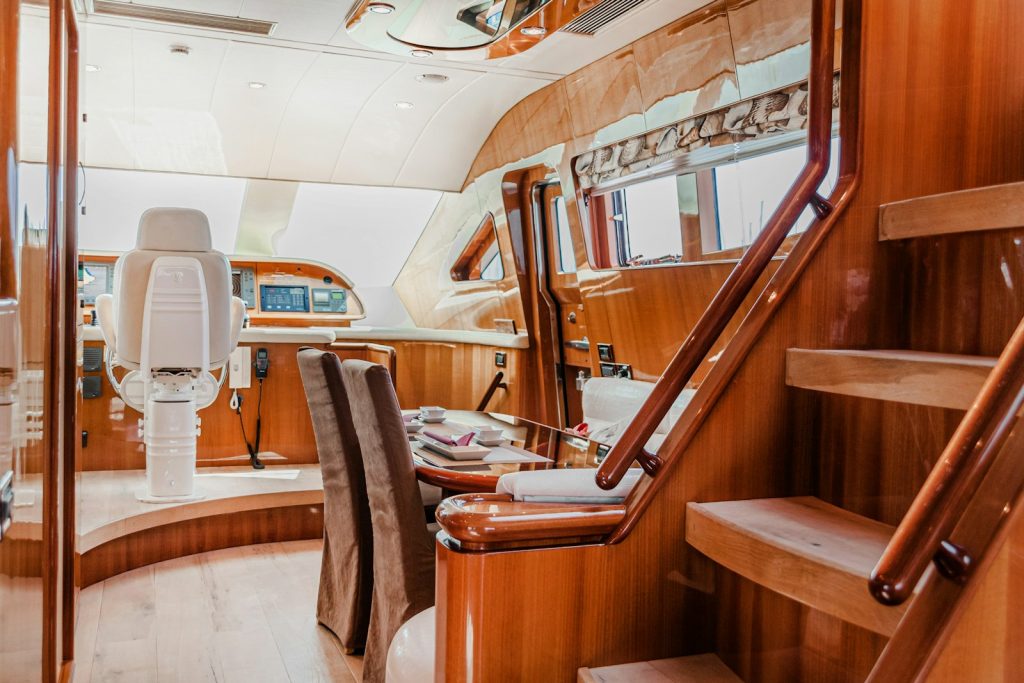
Phinisi design is the art and engineering of specifying a traditional South Sulawesi wooden vessel — hull form, rig, cabin arrangement, propulsion, and structural scantlings — in a way that makes the boat seaworthy, commercially viable, and worth the investment being put into it. The word “pinisi” technically names a two-masted, seven-to-eight-sail rig originating from the Konjo people of Bulukumba; popular use stretches it to cover the entire vessel. That distinction matters once you are paying for it, because a rig is a cost line, not a marketing word.
This guide is for people at the specification stage — commissioning a new build, planning a major refit, or evaluating a used boat before purchase. Every design choice covered here has a direct cost and yield implication. None of those costs are fixed numbers; they are ranges, and the wide ones exist for honest reasons.
The No-Blueprint Tradition and Why It Challenges Modern Builds
The panrita lopi — the master builder, known in some yards as the punggawa — carries the design entirely in his head. No drawings, no scantling tables, no hydrostatic calculations on paper. Dimensions, hull lines, and structural proportions are passed down orally within families, refined by decades of observation at sea. UNESCO inscribed this knowledge system in 2017 as “Pinisi, art of boatbuilding in South Sulawesi” — the inscription covers the practice, not a specific vessel type — and it is a genuinely remarkable tradition.
It is also a tradition that creates real risk for a commercial buyer investing USD hundreds of thousands or more. A 30-metre yacht built to a panrita lopi’s memory may be structurally sound — many are — but it carries no documented stability assessment, no verified load-line calculation, no record of structural decisions that a surveyor or insurer can audit later. When Dunia Baru’s owner commissioned his 51-metre hull in Sulawesi, the hull and superstructure came in at USD 130,000. What he did not know until later: the fasteners alone cost another USD 100,000, and they were not in the original scope. The hull was less than 15 percent of the eventual project cost. That gap between the builder’s quoted number and the real number is a structural feature of the no-blueprint tradition, not a one-off exception.
Naval architect Michael Kasten, who designed several of the most prominent large phinisi yachts built for the Western market — including Silolona and Dunia Baru — is on record at kastenmarine.com that most owner-built phinisi projects are run “shockingly badly, even unsafely.” He designed his commissions to Germanischer Lloyd structural scantlings and IMO stability standards. Those are the same standards that apply to classed commercial vessels elsewhere in the world. The fact that he had to specify this explicitly tells you what the alternative looks like.
Structural Standards: What “Class-Informed Design” Actually Means
Engaging a phinisi naval architect from the outset is precisely what allows a traditional hull to meet modern commercial certification requirements. Building to a classification society’s standards — whether Germanischer Lloyd (GL), Bureau Veritas, or Indonesia’s own Biro Klasifikasi Indonesia (BKI) — means that an independent third party has reviewed the scantlings, materials, welding or fastening details, and stability data before the hull goes in the water. For a wooden vessel this includes frame spacing, fastener size and metal specification, hull plank thickness relative to frame spacing, mast partner reinforcement, and ballast placement.
Why does this matter for a charter operator? Three reasons.
- Insurance. H&M insurers for wooden commercial vessels in Indonesia increasingly require BKI class or a recognised survey history. Without it, premiums run to the high end of the 1.5–4% of agreed value range observed in the market, or coverage is declined entirely.
- Certification. The Indonesian passenger-vessel safety certificate requires a stability booklet. A class-informed design produces one. A traditional no-blueprint build does not, unless an engineer is engaged retrospectively to assess the finished hull — expensive and sometimes inconclusive.
- Resale. A buyer evaluating your boat in five years will pay more for one with a documented structural basis. “Built to GL scantlings” or “BKI-surveyed during build” is a verifiable asset. “The panrita lopi checked it” is not.
Engaging a naval architect on a commercial build is not a luxury spend. On a 35-metre boat where the full fit-out will cost USD 1–2 million or more — a reasonable bracket for a Western-standard charter build, flagged here as an estimate — the architect’s fee is a fraction of the cost of fixing a structural problem discovered after launch, or of a stability certificate rejection that delays your operating licence by twelve months.
Materials: Ulin, Teak, and Bitti
Three species define phinisi construction, and each has a cost, a sourcing challenge, and a performance characteristic you should understand before finalising your spec.
- Ulin ironwood (Eusideroxylon zwageri)
- Used for keel, stem, sternpost, frames, and major structural members. Dense enough to sink in water — hence the informal name “the wood that sinks.” High resistance to teredo worm, rot, and salt water. Sourced primarily from Kalimantan and Sulawesi. Ulin is now legally controlled under Indonesian forestry regulations; scarcity has been climbing for two decades. What this means in practice: longer sourcing lead times, higher unit prices, and real variability in quality and legality of supply chains. A builder who quotes you a fast timeline on an ulin-framed boat should be asked how he knows the timber is already secured.
- Teak (jati)
- Used for decks, interior joinery, cabin soles, hatches, and trim. Java plantation teak is the standard source. Premium deck teak should be vertical-grain, 25mm minimum thickness for a charter deck that will take diving equipment and guest traffic. Thin teak applied as veneer looks the same from three metres and fails in five years. Specify thickness and grain orientation in writing.
- Bitti (Vitex cofassus)
- A Sulawesi native used for curved planking and secondary framing where ulin’s density makes bending difficult. Good durability, better workability than ulin for curved members. Less scarce than ulin, but still sourced locally and subject to the same general supply variability.
Some builders substitute Indonesian mahogany-family species for planking or framing on budget builds. These are not equivalent to ulin in marine durability. If a quote seems low relative to the vessel size, ask for the species list and the timber provenance certificates.
Cabin Count: The Math That Matters at Each Charter Tier
The best cabin layout for a 30m phinisi charter depends on the market tier you are targeting, not on the maximum number you can fit in the hull. More cabins is not more revenue. This is the design decision where the most money gets left on the table, or thrown away, at specification stage.
On a 30-metre hull, you have roughly 200–240 square metres of usable interior space, less structural volume, engine room, and the galley and heads that every boat needs regardless of cabin count. The question is how you divide what remains.
Open-trip budget builds (20–28m)
This market runs on berth count. Six to eight cabins, bunk or twin configuration, shared heads acceptable. The pricing model is per-person per-night, and Indonesian domestic travellers as well as budget international guests are the target. A listed 25-metre open-trip boat with seven cabins and sixteen guests is a documented example from the Labuan Bajo market. At this tier, more cabins fills more berths and drives gross revenue. Ensuite per cabin adds cost and reduces cabin count for marginal market premium in this segment.
Charter-grade mid-range (28–38m)
This is where the ensuite calculation flips. A 36-metre boat with five ensuite cabins for twelve guests outperforms a ten-cabin equivalent with shared heads on most Western booking platforms, all else equal. Boutique liveaboard guests — the USD 600–800+ per person per day bracket — do not share bathrooms. One documented 36-metre listing from the Labuan Bajo market specifies five ensuite cabins, twelve guests, and a Starlink installation. That configuration is consistent with the pricing tier it is targeting.
The general principle: below USD 400/person/night, berth count dominates. Above that price point, ensuite ratio and cabin privacy dominate. Designing for the wrong tier at build time is expensive to correct later because the structural partitioning is set at the planking stage.
Ultra-luxury 40m+ and flagship class
At the level of Lamima (65 metres, widely described as the world’s largest wooden sailing yacht, with the hull built at Ara in traditional Sulawesi fashion and the fit-out completed by Italthai in Thailand) and Prana (approximately 55 metres), the cabin count drops and the space-per-guest figure rises sharply. Published crew-to-guest ratios at this tier reach 26 crew for 16 guests — documented across several ultra-luxury liveaboard listings. At that ratio, the cabins are the smallest cost item. The staffing, the kitchen, the stabilisation, the tender garage, and the certification overhead are the money. A 65-metre boat with eight cabins and a dive deck is not designed to serve eight people comfortably; it is designed to justify rates in the USD 17,000–20,000 per night bracket where clients are comparing against superyachts globally.
Build-cost figures for Lamima, Prana, and comparable vessels have not been published in any source we can verify. Anyone who quotes you a specific number for these boats is estimating or selling something.
Phinisi Dive Deck Design: Where Charter Yield Lives on a Liveaboard
On a dive liveaboard, the dive deck is the product. The cabins are where guests sleep; the dive deck is where they spend their day. Yield on a diving-focused phinisi — and most serious liveaboard charters in Komodo and Raja Ampat are diving-focused — correlates strongly with how well the dive deck serves guests and crew simultaneously.
The core phinisi dive-deck design considerations:
Deck position and height
Stern or stern-quarter dive decks at water level are the standard configuration. The step into the water should be 30–50 centimetres above the waterline at load displacement — low enough for easy entry, high enough to stay dry in a chop. Boats built without this consideration, with the dive deck at main-deck height (1.2 metres or more above water), require entry ladders and create a board-and-climb sequence that fatigues older divers and makes dive marshal operations cumbersome. This is a hull-design decision; retrofitting a low stern dive platform on a hull not designed for it is expensive and structurally complex.
Tank capacity and rack layout
Budget builds typically carry 16–24 cylinders. A serious liveaboard with 12–16 guests diving three times daily needs 36–48 cylinders minimum to avoid turnaround bottlenecks. Tank racks should be integrated into the hull structure, not bolted to deck fittings — the load is significant and the deck vibration from a diesel fill compressor will work loose anything not properly engineered.
Compressor housing and noise
Fill compressors are loud. On short-range builds the compressor is often on the main deck or inside an inadequately insulated engine-room compartment. The standard on well-designed liveaboards is a separate compressor room with acoustic lining and its own ventilation, located well forward of the guest cabins and stern dive deck. Guests who cannot hear a conversation at dinner because the compressor is running will not rebook.
Tender garage and crane
On vessels 35 metres and above, a tender garage — an enclosed or semi-enclosed stern compartment for the dive tender or rigid inflatable — is both a weather protection measure and an aesthetic one. A crane or davit rated for the tender weight must be engineered into the transom structure at design stage. Adding it post-build means reinforcing the transom, often requiring the stern cabin to be compromised.
Rig: The Pinisi Sails, and What They Actually Do on a Charter Boat
Technically, the pinisi rig is two masts with seven or eight sails: a fore-and-aft cutter-style combination forward and a large main. This is the rig UNESCO named. It is a real working sail plan that made the Bugis and Makassar trading fleets competitive across Southeast Asian and Australian waters for centuries.
On a modern charter phinisi, the sails are largely decorative. Guests photograph them at anchor. A day of sailing, if the boat is in a position to sail and the crew are trained, is a selling point in the brochure. But the routing constraints in Komodo — currents, tight park waters, fixed departure/arrival schedules — mean that motoring dominates. The rig is a cost, not a propulsion system.
The cost items: mast timber (traditionally from a single large tree, now often sourced from Sulawesi or Kalimantan and becoming more expensive as old-growth diminishes), rigging hardware, sail canvas, and maintenance labour. On a 35-metre boat, replacing a mainsail is not a trivial number. Rig maintenance requires skilled labour that is not the same skill set as diesel mechanics. Budget for it.
Some modern phinisi yacht design commissions have opted for aluminium masts or carbon spars for reduced weight aloft and improved stability. This is practical but changes the vessel’s aesthetic and resale market. Buyers in the ultra-luxury segment often want the visual of traditional timber spars. Know your buyer before specifying materials.
Engine Sizing: The 850hp Question
Kasten’s published analysis makes a specific and verifiable point: phinisi hulls converted to yacht use are typically specified at around 850 horsepower, against the 250–350 horsepower engines that propel the same hull forms in cargo service. The difference is not hull-form inefficiency. It is the combination of higher speeds expected by charter guests, the weight added by full fit-out (furniture, generators, water makers, air conditioning, dive equipment), and the safety margin needed to maintain schedule in strong current environments like the Komodo Strait.
Two main engines on a 30–40 metre charter build are standard, sized for independent operation if one fails. The genset load — air conditioning is the dominant draw — often runs 60–80 kW continuous on a fully air-conditioned mid-range liveaboard. This is a system that many budget builds under-specify. An air-conditioning failure in August in Komodo, when average air temperatures are 30–32 degrees Celsius and cabin temperatures without cooling climb past 35, ends the charter.
Engine specifications on a used boat purchase should be treated with systematic scepticism. Reconditioned truck engines rebranded as marine units, absent service records, and tampered hour meters are documented patterns in the Indonesian used-boat market. Pull the engine logs and get an independent engineer to assess them before completing any purchase.
Hybrid Propulsion: Where the Market Is Heading
Hybrid propulsion phinisi builds are being discussed in yards and among operators, though completed examples operating commercially are still rare as of the time of writing. The concept is straightforward: a shaft-generator or battery-electric system allows the vessel to manoeuvre at slow speed, charge batteries under sail or on generator, and reduce fuel burn during anchorage — where charter phinisi spend a large fraction of their time. The dive compressor and air conditioning loads that dominate anchorage power draw are candidates for battery buffering.
The practical challenges on a traditional phinisi hull: battery weight and placement relative to the stability curve, the electrical engineering complexity in a wet wooden structure, and the availability of skilled electrical maintenance technicians in Labuan Bajo and Sorong. A hybrid system that requires a specialist from Jakarta to commission after every haul-out has a different real operating cost than the sales specification suggests.
Several newer builds are including solar arrays on shade structures above the main deck, which can cover low-load anchorage demand (lighting, some ventilation) without the complexity of a full hybrid drivetrain. This is a more conservative but more maintainable first step. The large lithium battery + electric drive configurations that work on short-range day-charter European vessels face genuine logistical and maintenance challenges in remote Indonesian waters.
If you are commissioning a new build and hybrid propulsion interests you, engage a naval architect who has designed marine electrical systems in tropical conditions and can provide a real operational cost model — not a marketing projection from a system vendor. Reach out via our enquiry form if you want to talk through which design professionals have this specific experience.
The Naval Architect Case: A Direct Argument
This section exists because many buyers still build without one, on the grounds that the panrita lopi has built forty boats without drawings and they have all floated. That argument is true and also irrelevant to your situation.
The panrita lopi’s boats float. They are also built for the use cases his knowledge was developed around: cargo, fishing, inter-island passage under sail and modest power, operated by Indonesian crews on Indonesian domestic routes, surveyed by local officials using practical rather than calculative standards. Your commercial phinisi will carry international guests paying premium rates, operate under a passenger-vessel safety certificate that requires a stability booklet, carry dive equipment at loads the traditional hull form was not optimised for, and be insured by underwriters who will send a surveyor.
A naval architect operating on a commercial phinisi commission typically contributes:
- A lines plan developed in dialogue with the panrita lopi, confirming the hull form to be built rather than hoping it matches the order.
- A stability calculation at design displacement and at load cases specific to your charter configuration (guests + gear + fuel + water).
- Scantling specifications for structural members, with metal fastener specifications that prevent the “$100,000 bolt surprise” scenario from the Dunia Baru record.
- Machinery arrangement drawings that position engine room access, sea-cocks, fuel tanks, and generator in maintainable locations — not wherever fits after the cabin arrangement is finalised.
- A document trail that supports BKI survey, insurance underwriting, and eventual resale.
The architect’s fee on a 35–45 metre commission is real money. Against a project that will cost USD 1–4 million to complete at charter standard, it is not a large fraction. Against the cost of a stability failure, a certification rejection, or a hull with structural defects discovered after full fit-out, it is trivially small.
To discuss whether your specific project scope warrants a naval architect and who has relevant experience in traditional Indonesian wooden construction, use our enquiry form or message us on WhatsApp — we can often point you toward the right professional without a commitment.
Design Decisions at a Glance
| Design decision | Budget / open-trip build | Charter-grade mid-range | Ultra-luxury 40m+ |
|---|---|---|---|
| Cabin count (30m equivalent) | 6–10 berths, shared heads | 4–6 ensuite cabins | 4–8 large suites |
| Structural standard | Panrita lopi judgment, minimal class | BKI survey during build recommended | GL or equivalent scantlings, full class |
| Primary structural timber | Bitti planking, mixed frames | Ulin frames + bitti planking, teak deck | Full ulin structure, premium teak joinery |
| Engine power (30–40m) | 250–450hp combined | 500–850hp combined [estimate] | 800hp+ combined, redundant gensets |
| Dive deck | Stern platform, basic rack | Low stern deck, 24–36 cylinders, separate compressor room | Dedicated dive centre, tender garage, crane |
| Naval architect engaged | Rarely | Recommended | Required for class and insurance |
| Approximate turnkey cost bracket [all figures: estimates, unverified totals] | USD 120k–400k | USD 400k–2M | USD 3M–15M+ |
Cost brackets are industry-observed estimates; no audited build totals have been published for any named luxury vessel. See our build cost guide for the full breakdown methodology and our operating costs guide for what you spend after launch.
What a Modern Phinisi Yacht Design Process Looks Like
The sequence that works, based on watching projects in the Bulukumba and Bira yards over many years:
First, the brief — not the boat. Specify the charter market, the price point, the waters (Komodo, Raja Ampat, or repositioning), and the guest experience before you specify the hull. A boat optimised for the Komodo mid-range dive market looks different from one targeting the luxury Raja Ampat week-charter segment. Both are valid; conflating them produces an expensive compromise.
Second, engage the naval architect alongside the panrita lopi from the outset, not after the keel is laid. The dialogue between a trained designer and a traditional master builder is productive when it starts early. Once major structural decisions are set in timber, they are not revisited.
Third, specify timber before contracting. Ulin sourcing timelines have extended as legal supply chains tighten. A contract signed today for a hull to be started in three months assumes timber that may not be available without sourcing from grey-market channels you do not want to be involved with.
Fourth, plan the fit-out venue at design stage. The standard pattern is hull built and launched at Tana Beru, Ara, or Bira — then towed or sailed for fit-out. Bali (Benoa/Serangan) is the most common destination for mid-range builds. Batam carries duty advantages for some imported equipment given its proximity to Singapore. Surabaya has established shipyard infrastructure. Thailand — as with Lamima — is a documented option for ultra-luxury fit-out where the specification demands capabilities not available domestically. Each venue choice affects cost, timeline, and the import-duty calculation on engines and electronics.
Fifth, budget the certification timeline independently of the build timeline. A stability booklet review, BKI survey, passenger-safety certificate, and operating licence do not move at the pace of the yard. Six to twelve months from hull launch to commercial charter operations is a reasonable planning assumption for a properly documented new build. This is a cash-flow item, not a technical one.
Frequently Asked Questions
Do I need a naval architect to build a phinisi?
For a budget open-trip build operating under local standards, the panrita lopi’s knowledge is often considered sufficient by Indonesian authorities. For any vessel targeting Western charter markets, requiring an international insurance policy, or needing a BKI class certificate or passenger-vessel safety certification with a stability booklet, a naval architect is not optional — it is the mechanism by which those documents are produced. The argument against engaging one is almost always a short-term cost saving that creates long-term certification and resale problems.
What is the best cabin layout for a 30m phinisi charter operation?
It depends entirely on your target market and price point. For guests paying under USD 400 per person per night, maximising berth count with five to eight cabins and acceptable shared facilities is standard. For guests paying USD 600 and above, four to five large ensuite cabins is the configuration that commands the premium rate. Building a ten-cabin budget layout and trying to charge luxury rates does not work — guests compare the cabin size and bathroom ratio against what they could get on a purpose-built liveaboard at a similar price. Specify the market first, then the cabin count.
What engines should a 35m phinisi charter boat carry?
Published data from Michael Kasten’s work puts yacht-specification phinisi at around 850 horsepower total, against the 250–350 horsepower of comparable cargo hulls. For a 30–38 metre charter boat, two main engines in the 250–425hp range each is a commonly observed configuration, paired with two independent generators sized for the air-conditioning and electrical load. The exact specification depends on displacement and the speed-over-ground requirements of your itinerary. Get an independent marine engineer to model the power budget before accepting a builder’s recommendation.
Is hybrid propulsion practical on a phinisi today?
Solar-assisted charging for low-load anchorage power (lighting, ventilation, modest electronics) is practical and increasingly common on newer builds. Full shaft-generator or battery-electric hybrid systems face real challenges: battery weight distribution relative to the stability curve, electrical engineering complexity in a wooden hull environment, and the availability of qualified maintenance technicians in remote operating areas. If hybrid propulsion is part of your brief, engage a naval architect with relevant marine electrical experience — not just a solar-panel supplier — and ask for an honest operational cost model covering the full lifecycle of the battery system.
Why does the rig matter if charter phinisi mostly motor?
The rig matters for three reasons that have nothing to do with propulsion. First, it is a major structural element: mast partners, shroud chainplates, and the keel reinforcement under the mast step are load paths that affect the hull. Specifying the rig afterthought means reinforcing structure that should have been designed in from the keel. Second, it is a marketing asset — sail photographs drive bookings on visual-heavy platforms. Third, it is a maintenance cost item that is easy to neglect and expensive to remedy when a mast head fitting fails at sea. Budget for it explicitly, even if you rarely set sail.
Related reading
- Owning a Phinisi: The Start-Here Roadmap (Buy vs Build, Budget, Legal, Operate, Exit)
- Booking Your Komodo Yacht Charter: A 2027 Guide for Families and Groups
- DP & Termin Pembayaran Pembuatan Kapal Phinisi: Struktur yang Melindungi Pemilik
- Galangan Kapal Bulukumba: Peta Tana Beru, Ara & Bira untuk Calon Pemilik Phinisi