Information, not advice: Phinisi Owner is an independent editorial guide — not a shipyard, broker, surveyor, or licensed adviser. Costs and regulations change and every vessel differs; verify figures with yards, independent surveyors, and licensed Indonesian counsel before committing money. If you engage a partner we introduce, that partner may pay us a referral fee at no cost to you.
The phinisi build cost is a number almost nobody in this market publishes straight. Budget a phinisi honestly and you are looking at a total project spend ranging from roughly USD 120,000 for a minimal 20-metre open-trip vessel to well over USD 15 million for a 55–65-metre flagship — and the wooden hull you commission in Sulawesi is typically less than ten to fifteen percent of that final bill. Everything else — engines, generators, electrical systems, plumbing, interior joinery, certification, project management, rework, and the imported equipment the builder never quoted — accounts for the other eighty-five to ninety cents in every dollar.
That gap between the builder’s initial quote and the project’s actual cost is the defining financial reality of commissioning a phinisi. Understanding it before you sign anything is the only way to avoid the scenario that has buried more than a few well-intentioned projects: running out of money after the hull is launched and the expensive work is still ahead of you.
The Only Verified Line Items in the Public Record
In fifteen years of phinisi research, one cost disclosure stands apart from all the builder brochures and forum speculation: owner Mark Robba’s account of building Dunia Baru, published in Boat International. The numbers are specific, owner-stated, and have never been credibly disputed.
The Konjo builders at Sulawesi quoted Robba USD 130,000 for the hull and superstructure of a 51-metre ironwood and teak vessel — roughly 800 cubic metres of timber, shaped by 20 skilled craftsmen with no blueprints, working by memory and eye. That quote did not include fasteners. The bolts and other fastenings added approximately USD 100,000 more, outside the original contract. Total committed at launch: around USD 230,000. At year 3.5 of the project, Robba had invested roughly USD 500,000 and the boat was still a raw hull.
The project eventually took eight years and reached a total cost estimated at roughly six times the initial USD 1 million projection — implying a final figure in the range of USD 5–6 million or more. Dunia Baru now charters at USD 140,000 per week.
[VERIFIED — Boat International, owner-stated] Dunia Baru, 51m: hull + superstructure contract USD 130,000 · custom bolts/fastenings outside the quote ~USD 100,000 · total project ~6× the original USD 1M estimate · 8-year build. Hull cost = a small fraction of total project spend.
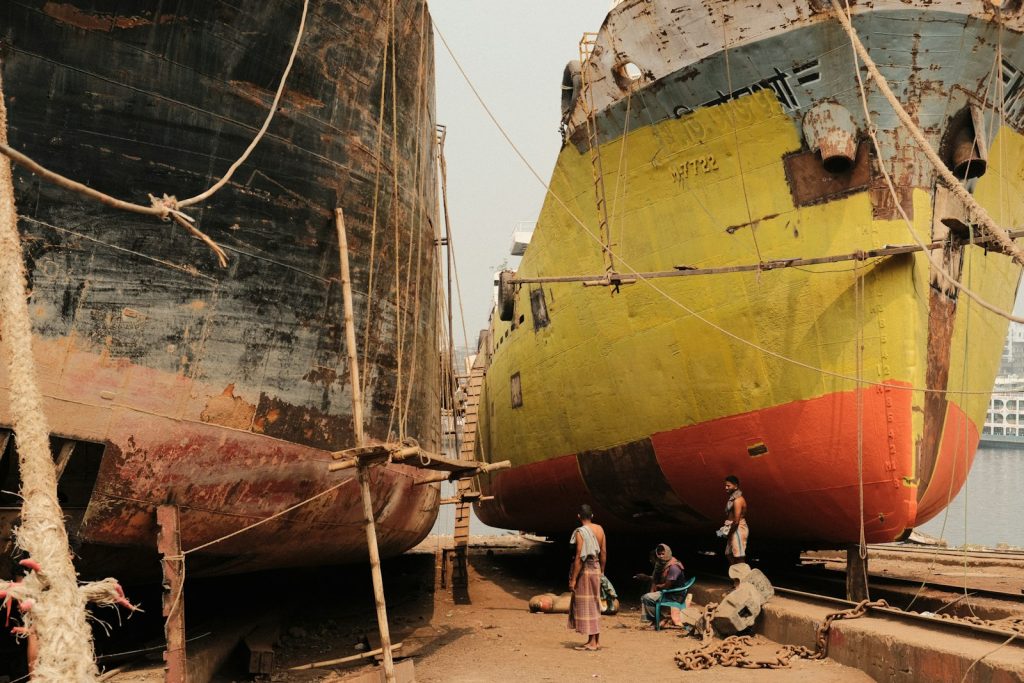
This is the structural insight every commissioning owner needs before reading any bracket table: the wooden hull is the cheapest part of the exercise. The punggawa (the master builder, known in South Sulawesi as panrita lopi) will give you a price for timber and labour that looks almost reasonable. What he will not quote is the machinery, the systems, the fit-out, the tow to Bali or Surabaya for engine installation, the certificate stack, the management time, or the cost of fixing work that did not meet Western safety standards the first time.
Hull-Only Cost by Size [ESTIMATE — no audited data; treat as orientation, not contract baseline]
These figures represent the approximate cost of commissioning a launched wooden hull at a Sulawesi yard (Tana Beru, Ara, or Bira in Bulukumba), including basic superstructure framing, before any engines, systems, or interior work. They are derived from market observation and cross-referencing publicly available builder discussions — not from audited contracts.
| Hull length | Hull-only estimate (USD) | Notes |
|---|---|---|
| 20–25 m | 30,000 – 80,000 | Typical open-trip or budget dive vessel; ulin keel/frames, bitti planking |
| 30–40 m | 80,000 – 200,000 | Mid-range charter class; ironwood hull, teak deck framing |
| 40–50 m | 120,000 – 250,000 | Superyacht-scale hull; scarcity of quality ulin adds cost and schedule risk |
| 55–65 m | 150,000 – 300,000 | Flagship class; Dunia Baru’s USD 130,000 hull sits at the lower end of this range |
Notice that hull cost scales weakly with vessel size — a 55-metre hull may cost only three to four times as much as a 25-metre hull, because the dominant inputs are skilled labour time and timber volume, both of which are cheap in Sulawesi. The fit-out and systems costs, by contrast, scale sharply with size and with the specification level the owner targets. That is why the hull percentage of total cost shrinks as the boat gets bigger and more sophisticated.
The Full Bracket Ladder: Budget to Flagship [ESTIMATE throughout — no audited totals exist for any tier]
Builder marketing — sites like riaramarine.com and similar Sulawesi/Bali yards — typically quotes basic 20–25m vessels at USD 100,000–250,000 and “luxury 30–40m” builds at USD 300,000–1,000,000. Label those figures [builder-claimed]. They describe what a yard will contract for, not what the owner will spend by the time the vessel is certified and charter-ready.
The brackets below attempt to reflect total commissioning cost — hull, engines, fit-out, rig, systems, certification, tow/delivery, project management, and a realistic contingency. Every figure is an estimate. No single source has audited these numbers end-to-end.
Tier 1 — Budget Open-Trip Vessel (20–30 m): USD 120,000 – 400,000 [ESTIMATE]
Targeting the Indonesian domestic open-trip and budget dive market. Typically one or two basic AC cabins or none at all, a rebuilt truck engine (Hino or Mitsubishi Fuso), simple electrical, no genset redundancy, no class. Build time 8–14 months. Fit-out happens at Benoa or a Labuan Bajo yard, not at the builder’s beach. These boats earn a living at IDR 15–25 million per day in the domestic market but face increasing regulatory pressure as Komodo safety inspections intensify. The USD 120,000 floor assumes a very basic 20-metre vessel; add USD 30,000–60,000 for each metre beyond 24 metres at this tier.
Tier 2 — Charter-Grade Mid-Market (30–35 m): USD 400,000 – 900,000 [ESTIMATE]
Five to eight ensuite cabins, proper marine generators, basic navigation and communication stack, some AEO-grade safety equipment, and a fit-out that can pass a Western charter broker’s inspection — barely. Teak interior work, proper heads with marine holding tanks, a dive compressor if targeting dive liveaboard bookings. This is the most populated segment in the Labuan Bajo fleet, and also the most competitive: industry estimates put 200–300+ licensed tourist boats of all types operating out of Labuan Bajo, with intense mid-market pricing pressure as a result. Build time 12–18 months hull plus 6–12 months fit-out.
Tier 3 — Western-Standard Charter (35–40 m): USD 1,000,000 – 2,000,000 [ESTIMATE]
This tier crosses the threshold into serious project management requirements. Eight to ten cabins, full air conditioning, commercial-grade generators with redundancy, proper electrical panel and distribution, VSAT or Starlink, water maker, grey and black water treatment, fire suppression, BKI class involvement, certified crew. The fit-out alone at this level — joinery, upholstery, fabric, soft goods — typically runs USD 150,000–400,000 for a 35–38-metre vessel. Naval architecture review and structural upgrades to meet stability and load-line requirements add further cost. Build time 18–24 months hull, 12–18 months fit-out. Most owners in this tier run significantly over both budget and schedule.
Tier 4 — 40–50 m Superyacht-Style: USD 3,000,000 – 7,000,000 [ESTIMATE]
Ten to fourteen cabins, full superyacht-grade interior, stabilisation systems, hybrid propulsion options, submersible, RIBs and tenders with dedicated storage and launch systems, crew quarters that can sustain a 20+ person crew on extended passages, full compliance with SOLAS passenger vessel provisions where applicable. Fit-out at this tier is typically done in Thailand (Phuket, Italthai-style facilities) or Batam (near Singapore for duty advantages on imported equipment — Kasten Marine flagged this years ago), rather than in Bali. Total build and fit-out often spans four to six years when project management gaps are factored in. Cost overruns of 50–100% vs initial contract are a realistic planning assumption, not a worst case.
Tier 5 — 55–65 m Flagship Class: USD 6,000,000 – 15,000,000+ [ESTIMATE]
This is the class occupied by vessels like Lamima (65 metres, widely cited as the world’s largest traditionally built wooden sailing yacht, hull from Ara/Bira, fit-out by Italthai in Thailand) and Prana by Atzaro (~55 metres). No audited build costs have been published for Lamima, Prana, Silolona, Vela, Si Datu Bua, Celestia, or any comparable vessel. Any figure you see cited online for these boats is unverified speculation. The USD 6–15M+ range is an informed estimate based on the Dunia Baru pattern and the known specification levels of this class. The upper end of the range or beyond is entirely plausible for a decade-long project with full superyacht specification and significant rework.
Ready to think through the numbers for your project? Use our enquiry form or reach us on WhatsApp — we can help you build a realistic commissioning budget before you commit to a yard.
The Quoted-vs-Actual Gap: Why Every Phinisi Build Seems to Double
Builder marketing quotes and actual project costs diverge by a systematic factor of roughly 2–6 times across the full range of documented phinisi commissions. This is not fraud. It is the predictable result of how the Sulawesi boatbuilding economy operates and how most owners underestimate the work that comes after launch.
- What the builder quote covers
- Timber, labour, and the hull to launch. Sometimes basic framing for the superstructure. Occasionally an engine — often a reconditioned truck engine that will need replacement before serious charter operations.
- What the builder quote does not cover
- Marine diesel main engines and gearboxes. Generator sets (typically one to three units at this tier). Fuel systems. Electrical distribution, switchboards, and wiring. Fresh water systems, water makers, holding tanks, grey water treatment. Navigation electronics and communication systems. Anchoring and mooring systems. Rig standing and running rigging, sails. Interior joinery, cabinetry, upholstery, bedding, plumbing fixtures. Air conditioning. Safety equipment (life rafts, EPIRBs, fire systems). BKI classification surveys during build (mandatory for commercial insurance). The tow from Sulawesi to the fit-out yard (often 1,000–1,500 nautical miles). On-site project management for 18–36 months. Certification fees. Rework when the first-pass quality does not meet specification.
- The scope creep dynamic
- Owners who visit the yard monthly catch problems early. Owners who commission remotely often arrive at launch to find structural decisions made without consultation — cabin placements that alter stability, deck arrangements that conflict with the planned systems layout, timber substitutions that affect maintenance life. Michael Kasten, the naval architect who designed Silolona, Dunia Baru, and Amandira, has written plainly that many owner-built phinisis reach the water in a state he describes as “shockingly bad, even unsafe” — a direct result of inadequate on-site supervision.
- Currency and import exposure
- Engines, gensets, navigation electronics, refrigeration compressors, and marine hardware are priced in USD or EUR. If the IDR weakens during your build — and it has moved 15–20% in multi-year periods before — your imported equipment bill in rupiah terms rises by that same percentage. Most builder contracts are written in IDR; your equipment exposure is in hard currency. Few first-time commissioners hedge this.
The practical implication: if a builder quotes you USD 300,000 for a 30-metre luxury phinisi, the correct planning figure is USD 600,000–900,000. If the quote is USD 500,000 for a 35-metre Western-standard build, plan for USD 1.0–1.5 million. These are not pessimistic numbers. They are what the documented record supports.
[Commonly reported — flag as industry guidance, not a guarantee] A contingency reserve of 20–50% on top of the total estimated project cost is the standard recommendation from experienced phinisi owners and project managers. For first-time commissioners without on-site supervision, 50% is the more prudent figure.
Phinisi Construction Cost Per Metre: A Useful Lens, with Limits
Phinisi construction cost per metre is a useful shorthand for comparing quotes, but it breaks down quickly at the tiers where fit-out quality and systems complexity are the dominant variables. A rough orientation:
- Budget open-trip: USD 4,000–12,000 per metre overall length [ESTIMATE]
- Charter-grade mid-market: USD 12,000–25,000 per metre [ESTIMATE]
- Western-standard: USD 25,000–50,000 per metre [ESTIMATE]
- 40–50m superyacht-style: USD 60,000–140,000 per metre [ESTIMATE]
- 55–65m flagship: USD 100,000–250,000+ per metre [ESTIMATE]
The per-metre figure at the flagship level approaches European composite superyacht territory — which tells you something important about what it actually costs to build a world-class vessel to superyacht standards, even in Indonesia. The labour arbitrage is real, but it applies only to timber and hours. Imported systems and high-end joinery materials cost what they cost anywhere in the world.
Hull-Only vs Full Fit-Out: What the Numbers Actually Mean
The phinisi hull only cost vs full fit-out comparison is not simply “add X for the interior.” It is better framed as three distinct cost phases, each of which can match or exceed the hull contract:
- Hull and launch — the builder’s contract scope. Typically 10–25% of total project cost depending on tier.
- Machinery and systems — engines, generators, fuel, water, electrical, safety, rig, communication. Often equals or exceeds the hull cost. A single pair of marine diesel main engines for a 35-metre vessel costs USD 40,000–120,000 ex-works, plus installation, fuel systems, and exhaust. Add two marine generators at USD 15,000–40,000 each. The machinery budget alone frequently runs USD 100,000–300,000 for a mid-range charter vessel.
- Interior fit-out and commissioning — cabinetry, beds, upholstery, heads, galley equipment, soft goods, final certification surveys, sea trials, snag-list work. At the Western-standard and above tiers, this is where cost overruns are largest, because it is the phase where owner taste and the practical constraints of a wooden hull interact most unpredictably.
Riara Marine — a Tana Beru yard that publishes a build-cost article — states that interior fit-out alone “can match or exceed the basic hull price.” That matches the Dunia Baru pattern and is consistent with what experienced commissioners report. It is also consistent with the [SINGLE-SOURCE, builder-claimed] brackets they publish: basic 20–25m at USD 100,000–250,000, luxury 30–40m at USD 300,000–1,000,000+. Treat those as the optimistic end of the contract cost — the realistic total project cost lands higher for the reasons described above.
Budget vs Luxury Phinisi Build: What USD 400k Gets You vs USD 4M
The budget vs luxury phinisi build comparison is ultimately a question of market position, not just specifications. Here is an honest summary of what each tier realistically delivers:
| Item | Budget open-trip ~USD 300–400k total | 40m luxury charter ~USD 3.5–5M total |
|---|---|---|
| Cabins | 4–6, basic AC, shared or semi-private heads | 8–10, ensuite, queen/twin beds, air-conditioned throughout |
| Propulsion | Reconditioned truck engine or basic marine diesel, ~200–350 hp | Dedicated marine diesels ~600–900 hp, gearboxes, controllable-pitch options |
| Power generation | Single generator, limited shore power | 2–3 redundant generators, shore power, solar assist |
| Water systems | Gravity tanks, basic fresh water | Water maker(s), grey/black water treatment, pressurised throughout |
| Interior materials | Local timber, basic fabric, functional rather than designed | Custom joinery, specified teak or smoked oak, designer upholstery, stone or resin surfaces in heads |
| Safety/class | Minimal: life rings, basic fire, no BKI class | BKI class, SOLAS-adjacent safety equipment, stability survey, sea trial documentation |
| Market access | Indonesian domestic open-trip, budget foreign backpacker market | International charter brokers, USD 5,000–15,000+/night gross rates possible |
| Charter rate ceiling | IDR 15–30M/day (~USD 1,000–2,000) | USD 5,000–15,000+/day; 40m+ vessels commanding serious broker attention |
The phinisi build cost 40m luxury tier deserves specific attention because it sits at the threshold where the vessel becomes genuinely marketable to international charter brokers — the firms that connect Western clients who pay in USD and expect superyacht service levels. Below USD 2–3 million total project cost, reaching that market is difficult. Above it, the vessel can access a charter rate tier that meaningfully changes the break-even calculation.
What No One Publishes: The Cost of Getting it Wrong
Beyond the build cost itself, there are two project failure modes that deserve mention because they do not appear in any builder’s marketing material.
The first is the Dunia Baru hull seizure. Robba’s boat was impounded mid-build in a local dispute — the hull was auctioned, and he had to buy it back at auction for approximately USD 40,000. A project that has been paid for by the owner can be seized in a creditor dispute between the builder and a local third party. This is not a theoretical risk. It happened to one of the most documented phinisi commissions on record. Mitigations include milestone-based payment structures, clear contract terms, and independent legal review of the builder agreement under Indonesian law — none of which are standard in the Sulawesi yard culture, where transactions are traditionally oral and trust-based.
The second failure mode is running the fit-out from abroad. Kasten is explicit: the owners who produce quality vessels are physically present or have a trusted, technically qualified representative on site throughout the build. Those who manage remotely, visiting a few times a year, routinely receive boats with structural deficiencies that only become apparent under sea trial or during the first charter season. The cost of remediation at that stage can equal or exceed the original hull contract.
A Worked Example: 30-Metre Charter-Grade Build
For a realistic commissioning scenario, see our companion page on the 30-metre worked build timeline and our analysis of fit-out cost line items. For Indonesian-language pricing detail, the harga kapal phinisi page covers bracket estimates in Bahasa Indonesia including ulin vs teak hull cost differences.
If you are in early-stage planning and want an independent view of build cost and sequencing for your specific size and specification, send us your brief or message us on WhatsApp. We have no yard to sell you, no listing to push, and no interest in making the numbers look easier than they are. No one can pay to change what we publish; if you use our free guidance and proceed with a partner or builder, they may pay us a referral fee at no extra cost to you.
Frequently Asked Questions
How much does it cost to build a phinisi from scratch?
The total cost to build a phinisi depends heavily on size and specification. A basic 20–25 metre open-trip vessel runs roughly USD 120,000–400,000 [ESTIMATE] for a complete project including hull, engines, and basic fit-out. A 30–35 metre charter-grade build typically lands between USD 400,000 and USD 900,000 [ESTIMATE]. A 35–40 metre vessel built to Western standards commonly costs USD 1–2 million [ESTIMATE]. At 40–50 metres with superyacht-level fit-out, expect USD 3–7 million [ESTIMATE]. The only fully documented build — Mark Robba’s 51-metre Dunia Baru — ran to an estimated six times its original USD 1 million projection over eight years [VERIFIED, Boat International].
What is the phinisi construction cost per metre?
As a rough orientation [ESTIMATE]: budget open-trip vessels run USD 4,000–12,000 per metre of overall length; charter-grade mid-market USD 12,000–25,000 per metre; Western-standard USD 25,000–50,000 per metre; 40–50m superyacht-style USD 60,000–140,000 per metre. These per-metre figures are blended estimates across hull, machinery, fit-out, and certification — not hull-only rates. The wooden hull alone is typically 10–15% of the total project budget.
Why is the phinisi hull so cheap compared to the total build cost?
The Sulawesi boatbuilding economy is built on abundant skilled labour and locally sourced timber. The punggawa (master builder) and his team of 20–50 craftsmen can hand-shape a 51-metre ironwood hull for USD 130,000 [VERIFIED — Dunia Baru]. What they cannot provide cheaply is marine-grade imported machinery, navigation electronics, certified safety equipment, quality interior joinery, or the project management and supervision required to ensure the whole assembly meets commercial vessel standards. Those costs are priced in hard currency and scaled to international markets, not to Sulawesi labour rates. The result is a wooden hull that represents a small fraction of a finished vessel’s cost.
How much should I budget for contingency on a phinisi build?
A contingency of 20–50% on top of the full estimated project cost is commonly cited among experienced commissioners [commonly reported — not a guarantee]. First-time owners without on-site supervision should plan at the higher end of that range. The documented sources of overrun include: fastenings and hardware not included in the hull quote (USD 100,000 in Dunia Baru’s case), rework required to bring structures to specification, FX exposure on imported equipment, local disputes causing delays, and project scope additions once the owner sees the vessel under construction. A separate contingency for post-launch certification and safety equipment upgrades is also advisable.
Do I need a naval architect for a phinisi build?
For any vessel intended for commercial charter, particularly one targeting Western or international markets, a naval architect or independent marine surveyor involved from the design phase is strongly advisable. The Konjo master builders work without blueprints — their traditional knowledge produces structurally sound vessels, but not necessarily vessels that meet modern stability, freeboard, or SOLAS requirements without modification. Michael Kasten, who has designed several major phinisi yachts including Silolona and Dunia Baru, has stated publicly that the quality of owner-supervised builds he has seen ranges from excellent to genuinely unsafe. Independent technical oversight is the single most cost-effective risk management step a commissioning owner can take — and it is almost always absent from builder quotes.
Related reading
- Phinisi Shipyards: Bulukumba, Tana Beru, Ara & Bira — How to Choose a Yard
- Phinisi Resale Value: Depreciation Reality and Why Listings Sit Unsold
- Proses Pembuatan Kapal Phinisi: Dari Ritual Peletakan Lunas sampai Annyorong Lopi
- Berapa Lama Membuat Kapal Phinisi? Estimasi Realistis per Ukuran (dan Kenapa Sering Molor)