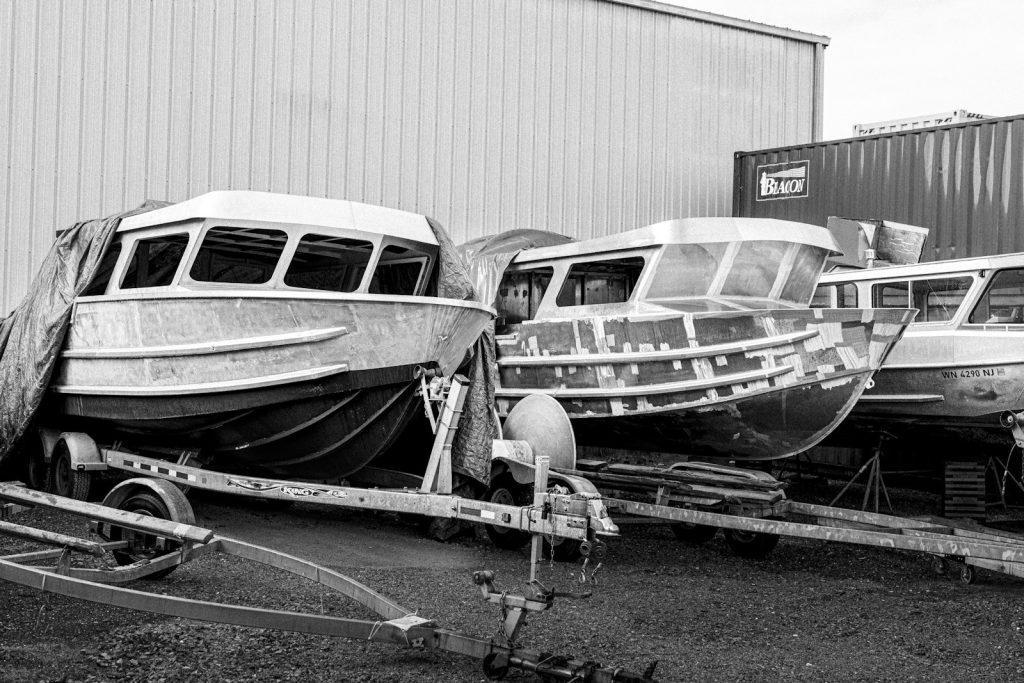
A phinisi shipyard in Bulukumba is the starting point for most new-build commissions in Indonesia. Bulukumba regency in South Sulawesi — specifically the coastal villages of Tana Beru, Ara, and Bira — is where the knowledge and the workforce that produces these vessels has concentrated for generations. UNESCO inscribed “Pinisi, art of boatbuilding in South Sulawesi” on its Representative List of Intangible Cultural Heritage of Humanity in 2017, naming Tana Beru and Bira (Bulukumba) alongside Batu Licin in South Kalimantan as the living centres of the craft. According to that same UNESCO documentation, roughly 70% of the population in these communities earns a living from boatbuilding or navigation-related work — a figure worth keeping in mind when you arrive and are told that every yard family has a “special relationship” with the right timber supplier.
This guide is for people commissioning a new phinisi (or pinisi — both spellings circulate; UNESCO uses “pinisi” for the rig, but “phinisi” dominates international charter and brokerage usage, and we use both). It covers geography, the economics of where to build different parts of your vessel, and a practical vetting framework you can apply before you hand over a deposit. What it does not do is tell you which specific yard to hire. There is no official yard registry. Output figures are unverifiable. And Kasten Marine’s naval architect Michael Kasten — who designed Silolona, Dunia Baru, and Amandira — has noted in his published work that he maintains a private list of yards he would not recommend, but does not publish it. That candor is instructive.
The Geography of Phinisi Boatbuilding
Tana Beru, Ara, and Bira: where the panrita lopi work
The three villages sit within about 40 kilometres of one another along the southern tip of Sulawesi. Tana Beru is the centre of gravity for larger hulls — if you walk the beach there at any season, you are likely to see two or three keels on the ground at different stages of framing. Ara specialises in hulls too, with some yards known for smaller vessels and skiffs. Bira, the easternmost point on the peninsula, has historically produced many of the master builders (panrita lopi in the local Konjo language, sometimes called punggawa when emphasising the project-management role) who now lead yards in all three villages and across Kalimantan.
The panrita lopi is the person you are really evaluating. There are no blueprints. Dimensions, hull lines, and structural scantlings exist in the builder’s memory, transmitted through apprenticeship within families. This is not a disadvantage if you have an experienced builder — it is why the UNESCO inscription covers the knowledge system itself, not just the boats that come out of it. It becomes a liability if you cannot verify what that knowledge system actually produces.
Batu Licin, South Kalimantan: timber economics
Kalimantan is the other UNESCO-named centre, and it matters to you for a different reason. Kasten Marine’s published analysis of phinisi construction economics makes the point clearly: Kalimantan offers the best timber economy for hulls. Ulin ironwood (Eusideroxylon zwageri) — the preferred keel, frame, and structural timber — originates in Kalimantan and Sulawesi. Sourcing it from yards near the source reduces handling cost and, in principle, selection time. Ulin is now legally controlled and increasingly scarce; a builder who claims to have abundant stocks deserves more questions, not fewer.
The practical implication: some commissioners choose to have a hull roughed out in Kalimantan for timber reasons, then move the vessel. Others stick with Bulukumba for the concentration of skilled labour, accepting that timber will be transported. Neither route is obviously superior. Both require the same oversight.
Where fit-out actually happens
This is the part most build guides omit. The Sulawesi yards build hulls and basic superstructures. Engines, generators, electrical systems, navigation equipment, air conditioning, and interior joinery are almost never completed in the villages. The standard practice is to launch the hull at Tana Beru or Ara — after the traditional annyorong lopi launch ceremony, in which the community pushes the hull into the sea with prayers and offerings — then tow or sail it to a port where marine systems contractors work.
Kasten’s framework identifies Jakarta, Surabaya, Benoa (Bali), and Batam as the venues where systems and fit-out cluster, with Batam carrying a duty-free advantage given its proximity to Singapore. For very high-specification projects, fit-out has gone elsewhere entirely — the 65-metre Lamima had her hull built in the Ara/Bira tradition but her fit-out completed by Italthai in Thailand. These logistics are not a footnote. Dunia Baru’s owner Mark Robba described a 1,500-mile tow to Bali in his Boat International account of that build. Every tow or delivery passage is an opportunity for delay, weather damage, and additional cost.
The Real Economics of Where to Build
The low structural cost of Sulawesi hull construction is one of the defining features of phinisi economics — and one of the most misunderstood. Dunia Baru’s hull-and-superstructure contract with the Konjo builders was quoted at USD 130,000 (owner-stated, Boat International, the only fully sourced line-item figure in the public record). An additional USD 100,000 in custom bolts and fastenings was not in that original quote. The hull was built, disputes arose involving third parties, the vessel was seized and bought back at auction for roughly USD 40,000, and the total project ran to an estimated six times the original USD 1 million projection over eight years.
This is the outlier story that every yard will tell you could never happen with them. It is also the one published account with real numbers. What it illustrates is structural, not specific to that yard: the hull cost is a small fraction of total project cost. Kasten puts it plainly — wooden hull construction can represent less than 10–15% of a complete project cost once machinery, systems, interior, rig, certifications, and project management are counted. The table below gives orientation brackets; every figure below the Dunia Baru line is an estimate derived from industry observation, not an audited cost.
Indicative cost orientation (estimates; not fixed quotes)
| Build tier | Vessel length | Hull-only (approx.) | Turn-key bracket | Notes |
|---|---|---|---|---|
| Basic open-trip | 20–25 m | USD 30–80 k [estimate] | USD 120–400 k [estimate] | Local safety standard; no class |
| Charter-grade mid | 30–35 m | USD 80–200 k [estimate] | USD 400–900 k [estimate] | BKI class, basic AC, diesel genset |
| Western standard | 35–40 m | USD 100–200 k [estimate] | USD 1–2 M [estimate] | Full ABYC/GL spec, full electronics |
| Superyacht-style | 40–50 m | USD 120–250 k [estimate] | USD 3–7 M [estimate] | Italthai-grade fit-out territory |
| Flagship class (Lamima tier) | 55–65 m | USD 150–300 k [estimate] | USD 6–15 M+ [estimate] | No audited build costs published for any named vessel |
The Dunia Baru hull-and-superstructure figure (USD 130,000 + USD 100,000 fastenings) is the only independently corroborated line item across all tiers. Everything else is bracketed industry observation. Builder marketing blogs from Sulawesi yards quote “luxury 30–40m from USD 300k” and treat that as a turn-key number; it is at most a hull-and-basic-superstructure figure from a party with inventory to sell. If someone quotes you a turn-key price for a 40m vessel under USD 1M, ask them to itemise engines, gensets, electrical, plumbing, AC, electronics, rig, interior joinery, and certification fees separately.
Ready to think through build scope and sequencing? Use our enquiry form to outline what you need — we can help you structure the right questions before you visit yards.
How to Vet a Phinisi Shipyard
There is no official yard registry. There is no certification system for panrita lopi competence, no inspectorate issuing yard licences, and no public database of build quality outcomes. This is not a criticism of the craft tradition — it is information you need before you negotiate a contract.
Reference builds you can physically inspect
Ask every yard: what boats have you launched in the last five years that I can board? A yard producing quality work will have vessels operating in Labuan Bajo, Bali, or Raja Ampat. Arrange to visit them. Walk the bilges. Inspect the keel-plank fastenings. Ask when the vessel last hauled out and what was found. If the yard cannot name recent reference builds, or if every example involves an owner you cannot contact independently, treat that as a significant signal.
Kasten’s published assessment of the typical phinisi commission process uses the phrase “shockingly bad, even unsafe” to characterise many completed projects — and Kasten is someone who admires the craft tradition and has designed multiple landmark vessels. The gap between what a skilled panrita lopi can build and what a rushed, under-supervised project delivers is large enough to matter for your safety budget and your re-sale value.
Written milestone contracts
Payment staging in Bulukumba has historically been trust-based and oral. Modern commissions increasingly use written contracts, but “increasingly” does not mean “universally,” and the terms vary by yard and by relationship. A reasonable structure — reported as industry practice, not a standard — runs approximately 20–30% at keel-laying, further payments at frames-up, planking complete, and deck closed, with a final tranche at successful launch. Industry-reported practice; no standardised contract exists and terms vary significantly by yard and relationship.
The key protections are milestone specificity and surveyor-triggered release. Pay at verified construction milestones, not at calendar intervals. If the contract says “30 days after keel-laying,” you are effectively on a time-based schedule regardless of progress. If it says “frames-up confirmed by an independent surveyor,” you have leverage.
Surveyor access during construction
Appoint an independent marine surveyor with wooden-vessel experience before you sign a build contract. Not after the hull is launched. The surveyor’s role during a phinisi build is different from a post-delivery condition survey: they need to observe timber selection (moisture content, species verification, defect grading), fastener specification (ulin pegs versus metal bolts, and if metal, the alloy), planking thickness at specified stations, caulking and sealing before painting covers everything, and structural connections at the keelson, floors, and frames. Once a hull is painted and launched, much of this is inaccessible for years.
BKI (Biro Klasifikasi Indonesia) involvement from the design stage onwards offers a formal classification pathway that also makes the vessel more insurable and more financeable for a future buyer. Not every owner needs BKI class — it adds cost and time — but for any vessel intended for commercial charter, it removes ambiguity with insurers and with Syahbandar when operating certificates come up for renewal.
Timber documentation
Ulin ironwood is legally controlled. Sourcing documentation — harvest permits, chain-of-custody paperwork, supplier identity — is worth requesting before you commit. You may not be able to verify it independently, but a builder who cannot produce any documentation for structural timber, or who dismisses the question, is telling you something about how the rest of the project will run. Plantation teak (jati) used for decks and interiors is less fraught. Bitti (Vitex cofassus), a Sulawesi-native timber used for curved planking and frames, has fewer regulatory complications but variable quality — seasoning matters.
Communication cadence
A build at Tana Beru or Bira that you do not visit regularly will drift. Kasten’s recommendation for phinisi commissions is explicit: either employ a full-time on-site project manager, or expect to spend significant time there yourself at each critical stage. Photo updates on WhatsApp are not construction supervision. The yards that produce the best outcomes for international commissioners are typically those with a dedicated point of contact who speaks Indonesian and English, understands the technical vocabulary of the build, and can flag problems before they become fixed structures.
Pembuatan Kapal Pinisi: Pertimbangan Praktis (For Indonesian-Language Readers)
Bagi pembaca yang mencari informasi tentang tempat pembuatan kapal phinisi atau pembuatan kapal pinisi Tana Beru, poin-poin utama di atas berlaku sama: tidak ada daftar resmi galangan kapal, tidak ada sertifikasi panrita lopi yang bisa diverifikasi pihak luar, dan angka biaya yang beredar di internet hampir semuanya berasal dari pihak yang punya kepentingan menjual.
Yang perlu diperiksa sebelum tanda tangan kontrak: kunjungi kapal hasil karya galangan tersebut di Labuan Bajo atau Bali, minta akses surveyor independen selama konstruksi, pastikan kontrak berbasis milestone bukan kalender, dan dokumentasi kayu ulin perlu diminta dari awal. Untuk phinisi builders Bira, tradisi pembuatan kapal di sana sudah berlangsung berabad-abad — tetapi kualitas hasil akhir tetap bergantung pada pengawasan dan kontrak yang jelas, bukan hanya reputasi kampung.
Common Failure Points in Phinisi Builds
The SERP for “how to build a phinisi” is dominated by yard blogs and brokerage pages that describe the process the way it goes well. Here is a shorter accounting of where projects go wrong.
- Scope creep in the superstructure
- Owners add cabins, extend the flybridge, or redesign the salon mid-build. Every addition that is not in a written addendum with revised pricing is a negotiation at the worst moment — when the hull is half-built and you cannot walk away easily.
- Timber substitution after contract
- The agreed timber species or grade is not what arrives at the yard. Without surveyor presence at timber delivery, you will not know until water enters somewhere it should not.
- FX exposure on imported systems
- Engines, gensets, navigation electronics, and AC units are priced in USD or EUR. A contract quoted in IDR that takes 18 months to complete carries meaningful currency risk, and most Sulawesi yard contracts do not include FX adjustment clauses.
- The “local partner” dispute
- Dunia Baru’s hull was seized by a third party claiming a stake in the project and bought back at auction for approximately USD 40,000 after earlier investment of around USD 500,000. This is the documented outlier. The mechanism — informal arrangements with local intermediaries that create unrecorded claims on the vessel — is not unique to that project.
- Certification-last sequencing
- Builders who treat BKI or Syahbandar certification as a final step rather than a design input often find that the completed vessel does not meet stability or safety requirements without structural modification. Building to known certification requirements from the start costs less than retrofitting.
Kalimantan Wooden Boat Building: When It Makes Sense
The case for starting a build in Kalimantan — Batu Licin and the surrounding South Kalimantan yards — is primarily timber access. For owners commissioning a hull with heavy ulin structural requirements, a builder in Kalimantan can be closer to the supply chain. Labour skill levels at the best Kalimantan yards are comparable to the Sulawesi villages; the panrita lopi tradition is present there too, as UNESCO recognises.
The case against is simpler: the concentration of experienced labour for complex yacht-grade hulls is still highest in Tana Beru and Ara. For a working cargo hull or a basic tourism vessel, Kalimantan competes well on cost. For a 40m-plus vessel with a sophisticated superstructure, most experienced commissioners and naval architects still point to the Sulawesi villages. Kalimantan wooden boat building remains an important part of the supply chain — particularly for structural timber supply — but fewer international commissioners choose it as the primary build site for high-specification projects.
Either way, the fit-out question does not change: whether your hull starts in Sulawesi or Kalimantan, the engines and systems will almost certainly be installed elsewhere.
What to Do Before You Visit a Yard
Before you get on a flight to Makassar, three things will make your yard visit substantially more useful. First, define your specification in writing — overall length, number of cabins, intended use (private, charter, liveaboard), propulsion type, approximate systems spec. Not because you will negotiate from that document, but because it forces clarity about what you are actually commissioning. Second, engage a naval architect with phinisi experience, even if only for initial consultancy; the architect can identify which yards are likely to be appropriate for your spec, and their name in the conversation changes the dynamic. Third, appoint a surveyor before you sign anything.
If you are planning a first visit to the yards and want to structure your questions effectively, reach out via our enquiry form or message us on WhatsApp — we can share what to look for and how to read what you see on the beach at Tana Beru.
Frequently Asked Questions
How do I find a reputable phinisi shipyard in Bulukumba?
There is no official yard registry in Bulukumba or anywhere in Indonesia. The most reliable route is to identify vessels built by a specific yard that are currently operating in Labuan Bajo or Bali, arrange to inspect them, and speak to their owners independently of the yard. Reference builds you can physically board are worth more than any testimonial or marketing claim. If a builder cannot name recent reference vessels or will not facilitate contact with previous clients, that is a meaningful signal.
Is it better to build a phinisi in Sulawesi or in Kalimantan?
For high-specification yacht-grade hulls, most experienced commissioners and naval architects favour the Sulawesi villages — Tana Beru, Ara, Bira — because the concentration of skilled labour is higher. Kalimantan (particularly Batu Licin) has an advantage in ulin ironwood timber access, since the wood originates there, and some builders and owners have used it successfully for more straightforward vessels. UNESCO names both as living centres of the tradition. The fit-out question is separate: regardless of where the hull is built, engines and systems are installed in Jakarta, Surabaya, Benoa, Batam, or occasionally overseas.
What should a phinisi build contract include?
At minimum: specification of timbers (species, grade, and treatment), milestone-linked payment schedule with surveyor sign-off triggering each release, a clear definition of what is and is not included in scope (hull only? superstructure? decks? fit-out?), a dispute mechanism, and provision for an independent surveyor to have access at all stages. Verbal agreements and calendar-based payment schedules are the two most common contributors to build disputes. Written milestone contracts are industry practice for international commissions, but terms vary significantly — no standardised phinisi build contract exists.
Why does a phinisi build so often cost more than the initial quote?
Several factors combine. Hull construction can be quoted accurately, but engines, gensets, navigation electronics, and interior fit-out are priced in foreign currency and procured separately — meaning FX moves and specification upgrades compound over an 18–24 month build. Scope additions that seem minor (an extra cabin, a larger salon) require structural changes that are difficult to price at the design stage. And the fit-out venues — Bali, Surabaya, Jakarta — add logistics, yard fees, and contractor margins that were not in the original Sulawesi quote. The Dunia Baru project, where an initial USD 1 million projection eventually reached an estimated six times that figure over eight years, is the documented outlier — but cost overruns of 20–50% on loosely scoped projects are reported as common industry practice.
Can a foreigner directly supervise a phinisi build at Tana Beru or Bira?
There are no legal restrictions on a foreigner travelling to Bulukumba and being present during construction. The practical challenge is sustained presence over a build cycle of 12–24 months or more. Most international commissioners either appoint a local project manager who makes regular site visits, or engage a naval architect with regional relationships to provide intermittent supervision. The yards that work most successfully with international clients are those that have established a communication structure — regular photo documentation, a single accountable point of contact, and a clear escalation path when specification questions arise. WhatsApp photo updates are better than silence, but not a substitute for physical inspection at critical stages.
Related reading
- Phinisi Resale Value: Depreciation Reality and Why Listings Sit Unsold
- Proses Pembuatan Kapal Phinisi: Dari Ritual Peletakan Lunas sampai Annyorong Lopi
- Berapa Lama Membuat Kapal Phinisi? Estimasi Realistis per Ukuran (dan Kenapa Sering Molor)
- Foreign Ownership of Boats in Indonesia: Cabotage, PT PMA & the Structures That Hold